Begin or finish in Zurich
This guide is for a private limousine itinerary with Zurich as its starting point or final destination. Choose a Zurich city address or Zurich Airport and describe the destination, any stops and the return arrangement. Share your actual schedule so the team can review the full journey and offer the right chauffeur service.
Business Class for focused journeys
An E-Class category is a practical preference for a small party travelling to a meeting, a city hotel or the airport. Check passenger and luggage needs together. A larger suitcase, a pushchair or specialist equipment may change the recommendation even when the party itself is small.
First Class for a considered arrival
An S-Class category suits guests who prefer a flagship sedan for their journey. Request the category and explain any particular needs, then wait for the actual model and availability to be confirmed. Illustrative photographs show the character of a vehicle category; they are not a guarantee of the exact car supplied.
Business Van for travelling together
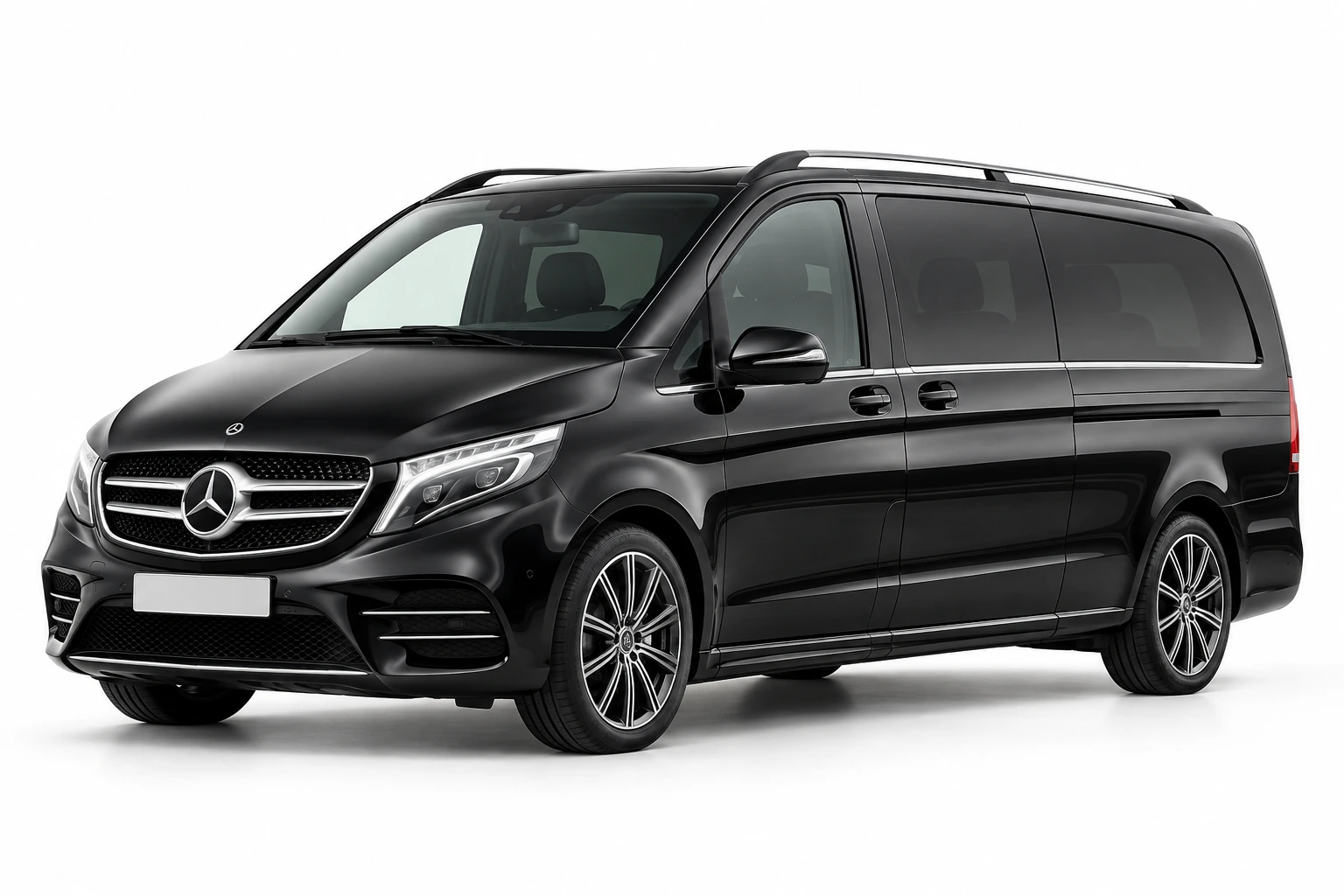
A V-Class category can suit a family or group that wants to remain together. Include every passenger and item of luggage in the request. Child seats occupy space, and several large equipment bags may affect capacity. The dispatcher should confirm the combination instead of relying on a passenger number alone.
Larger groups need a clear manifest
For a Sprinter or more than one vehicle, give a complete passenger count, luggage list and the pickup plan. If arrivals are on different flights, identify each flight and traveller. A group organiser should be reachable to coordinate changes and ensure everyone understands the meeting point.
Ask about access and assistance
Describe any assistance or mobility requirement in plain language before booking. A vehicle category by itself does not establish accessibility or the availability of particular equipment. Ask the team to confirm the practical arrangement. If a property has limited vehicle access, share the host’s instructions with the request.
Ultra Class means specifying the details that matter
The Mercedes-Maybach preference is for travellers seeking an elevated sedan experience. If a particular cabin layout, model year or amenity matters, write it down explicitly rather than assuming it from a photograph or category name. Ask the team to identify the assigned model in the offer. A quiet airport arrival for two people and a full working day with several stops can require different arrangements even when the preferred vehicle is the same.
Read fleet photographs as references
The gallery uses illustrative vehicle images to explain category preferences. An illustration cannot establish ownership, model year, equipment or the exact vehicle dispatched. For an exact vehicle requirement, seek written confirmation and a current photograph of the assigned car before accepting the offer. Even an authentic photograph is only one part of the decision: match the confirmed passenger layout, luggage capacity and any assistance arrangements to the needs of your party. Keep those details with your travel confirmation so the group organiser can check the agreed requirements before departure.
Turn preferences into a specification
Before comparing photographs, write a short list of requirements that would change your decision. These might include the number of passengers, space for equipment, a specific model year, a preferred cabin layout or an assistance requirement. Separate essential conditions from preferences that can be flexible. Send the essential list before a price is agreed. A vehicle with a prestigious badge may still be unsuitable for a particular luggage load, while a larger vehicle can be the more comfortable choice for a group that needs to stay together. Ask the team to confirm the combined requirements, not each one in isolation.
Understand the difference between seats and usable storage
Seats are only one part of a vehicle assessment. The number of bags, their shape and the chosen cabin layout affect what can travel together. A suitcase count is most useful when you distinguish large checked cases from compact cabin bags. A foldable pushchair, wheelchair, musical instrument or display case should be described separately with dimensions where possible. Do not assume equipment can simply be placed on an unused seat. The operator must decide how the load can be carried appropriately. If the group adds luggage after confirmation, request another assessment before pickup.
Choose a sedan for the experience you need
For a smaller party, compare the E-Class Business preference with the S-Class First preference by considering the purpose of the journey and the features you actually value. If you need a quiet place to work, ask about the relevant arrangement rather than assuming every vehicle provides the same equipment. If an exact model matters for a special arrival, ask for a current photo and written identification. The website category gives the team a starting point; it does not assign a particular car. Any promised amenity belongs in the confirmed offer.
Assess a van as a complete passenger arrangement
For a V-Class, ask how the seats will be arranged for your group and whether the requested child seats and bags fit that arrangement. If passengers need to board from a particular side because of the pickup location, discuss that practical constraint. A person who needs assistance may require a different configuration or a specialist service; the word van alone says nothing about accessibility. For several colleagues travelling together, consider whether all passengers arrive at the same time. A comfortable common cabin does not solve a pickup plan built around incompatible flight schedules.
Specify a Sprinter conversion rather than just the badge
Sprinter vehicles can be configured for different uses. When requesting the 16-passenger category, state explicitly that the count excludes the chauffeur and describe the luggage carried by those travellers. Ask for confirmation of the actual passenger layout, boarding arrangement and luggage space. If the supplier proposes two vehicles instead, agree how the party will be divided and who coordinates each vehicle. The reference photo on this website is an exterior example and cannot verify the interior configuration. An illustrative image cannot verify a seating promise.
Check the replacement arrangement before you travel
Ask how the team would handle a change to the assigned vehicle and which of your requirements must still be met. A suitable replacement should be assessed against the confirmed passenger and luggage needs. If an exact model or year is essential, make clear whether you would accept an alternative and under what terms. Keep this discussion in the written arrangement rather than relying on assumptions from the fleet gallery. On the day, if a material detail differs from what you accepted, contact the team before starting the journey so the issue can be addressed. Check that any replacement still accommodates the agreed child seats, assistance needs and all equipment. Give the lead passenger the revised identification so they can recognise the correct arrangement.
Record the agreed specification
After receiving an offer, keep one concise specification with the itinerary: passenger count, bag count, vehicle category and any expressly agreed equipment. If the supplier proposes a replacement vehicle, compare that list against the replacement instead of judging solely by the model name. This is especially useful when different people handle the original enquiry and the travel-day collection. A clear record helps the organiser identify a material change before the party boards.
Compare your options
| Preference | Best starting question | Confirm before reserving |
|---|---|---|
| E-Class · Business | Is this a small-party business or airport journey? | Suitcases and any bulky items |
| S-Class · First | Is flagship sedan comfort the priority? | Actual model and requested year |
| V-Class · Business Van | Does the party need to remain together? | Seat arrangement with all luggage |
| Maybach · Ultra | Which cabin details are essential? | Specific model and equipment |
| Sprinter · up to 16 passengers | Can one agreed configuration carry the group? | Passenger seats excluding driver and luggage space |
Your travel checklist
- Count every passenger, including children
- Measure equipment that will not fit an ordinary suitcase
- Choose a category for comfort and space
- Ask for confirmation of the actual vehicle and model year
- Check luggage capacity together with the seat layout
Questions about this journey
Does selecting a class reserve that exact model?+
No. It records a preference. The assigned model, date availability and service details are confirmed separately.
Which Mercedes category is Business Class?+
The E-Class is the Business Class sedan preference. V-Class is the Business Van preference; S-Class is First Class and Maybach is Ultra Class.
Why should I specify luggage before selecting a van?+
Storage changes with the seat configuration. Passenger count alone cannot establish whether a group and its equipment will fit.