
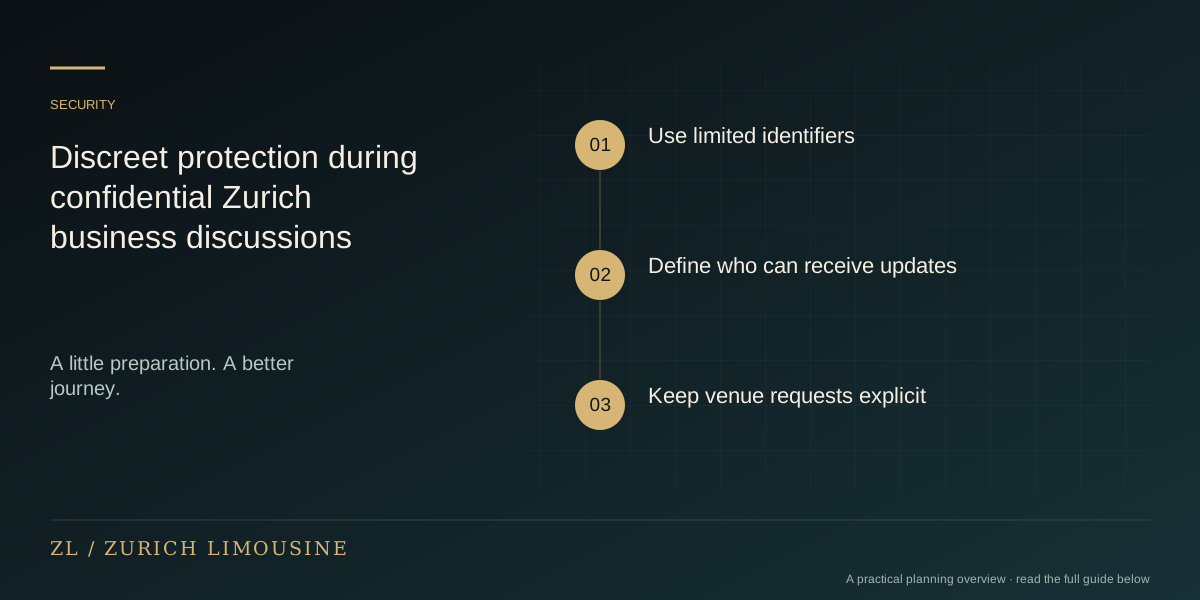
Use limited identifiers
For early planning, a company reference and designated coordinator may be sufficient. Share personal names only when they are needed for access, booking or service delivery. Do not include transaction names, valuations or negotiation documents in a public enquiry form; they do not help establish the basic service requirements. A neutral booking label can reduce unnecessary disclosure, but the provider may still need verified client and billing information through its ordinary booking process.
Define who can receive updates
Agree a short list of authorised contacts before the day begins. Reception staff, drivers and external advisers may need different levels of information. A simple communication boundary helps prevent ordinary logistical messages from becoming an unintended source of sensitive commercial disclosure. Ask the client’s internal owner to approve the contact list, then update it when an adviser joins or leaves the project instead of forwarding messages indiscriminately.
Keep venue requests explicit
If a private meeting room or separate reception arrangement is desired, ask the venue directly and obtain its confirmation. A bodyguard booking does not confer control over hotel or office facilities. Record any agreed venue provision separately so the client can see which organisation is responsible for delivering it. If the venue offers a particular arrangement, keep its written confirmation accessible to the client’s coordinator so responsibilities can be checked without exposing negotiation details.
Set a careful reporting scope
Request a concise service record focused on agreed hours, locations and exceptions relevant to the booking. Avoid requesting unnecessary observations about private conversations or participants. Decide who receives the record and how long it is retained under the client’s applicable policies rather than creating a broad distribution list. Agree whether the client needs a simple attendance record or a narrative report; collecting more information than necessary can undermine the privacy objective.